Optical lens maintenance is the core detail that determines product quality and user experience. High-precision coated lenses are extremely delicate and cannot withstand rough daily cleaning. For a long time, the optical industry has been troubled by lens scratch, coating peeling and blurred imaging caused by incorrect cleaning tools. Today, professional microfiber lens cloth has completely replaced ordinary cloth and becomes the standard matching tool for high-end optical maintenance.
Industry Pain Points: Why Ordinary Cloth Fails Optical Cleaning
Most traditional cleaning cloths and cotton towels are designed for daily household cleaning, not for precision optical equipment. Their inherent material defects will cause irreversible damage to coated lenses during long-term use:
 Coarse fiber texture: Thick and hard fiber edges produce subtle friction scratches on the lens surface
 Dust and grit residue: Ordinary fabrics easily trap fine particles, forming abrasive points during wiping
 Lint falling problem: Residual fiber debris leads to incomplete lens cleaning and affects light transmission
 Coating wear acceleration: Long-term use causes anti-reflection and blue-light coating to fall of prematurely
Core Advantages: Professional Microfiber Lens Cloth
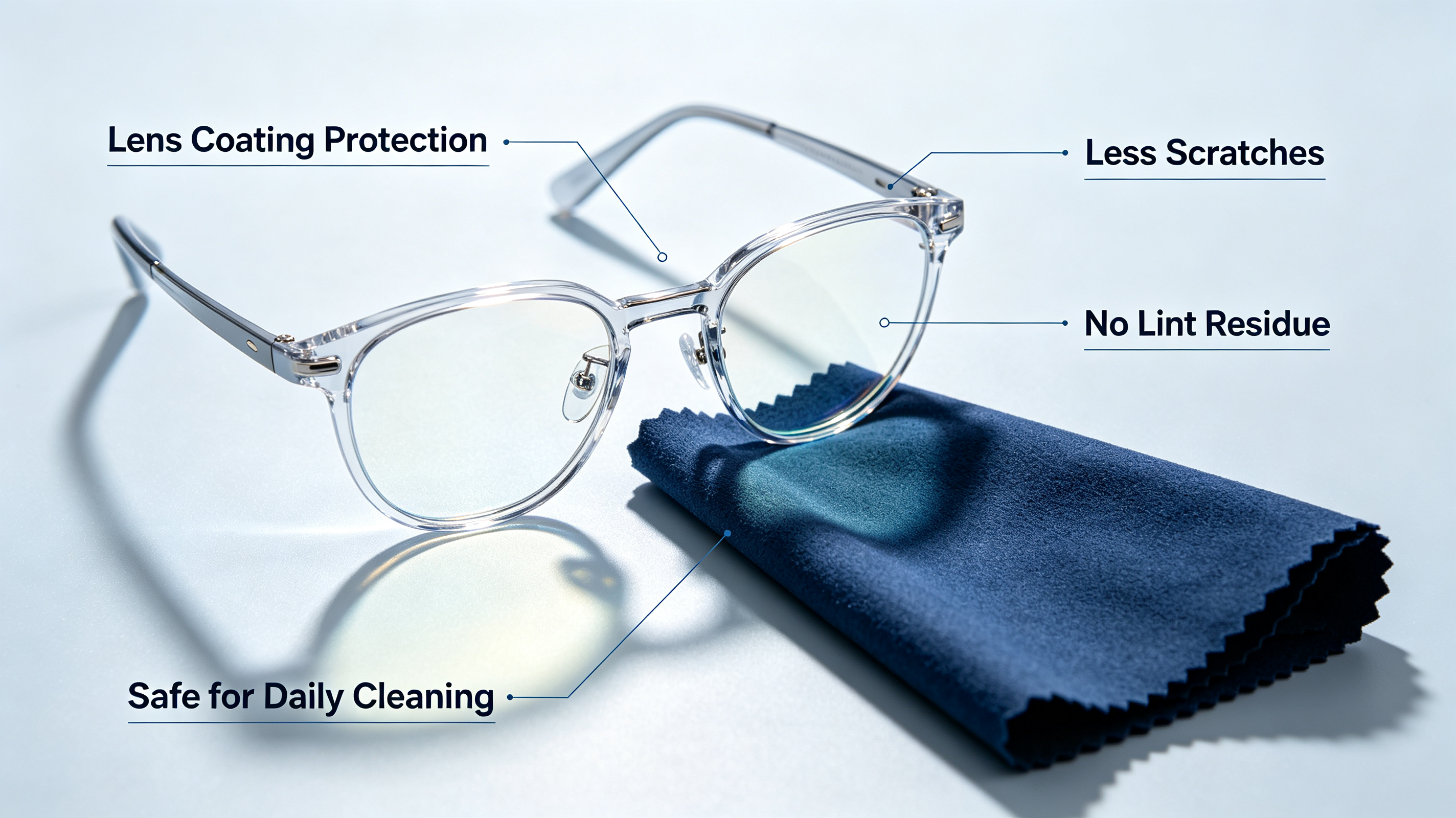
Industrial microfiber lens cloth adopts innovative split-fiber weaving technology, which perfectly solves all cleaning pain points of ordinary fabrics and meets the ultra-high protection standards of the optical industry.
Micron-level ultra-fine fibers: 1/20 thinner than ordinary cotton fibers, zero hard edges, fits lens fit tightly
Physical dirt locking technology: Adsorbs oil, fingerprints and dust internally without scratching the lens surface
Full coating compatibility: Safe for polarized lenses, AR-coated lenses, camera lenses and optical instruments
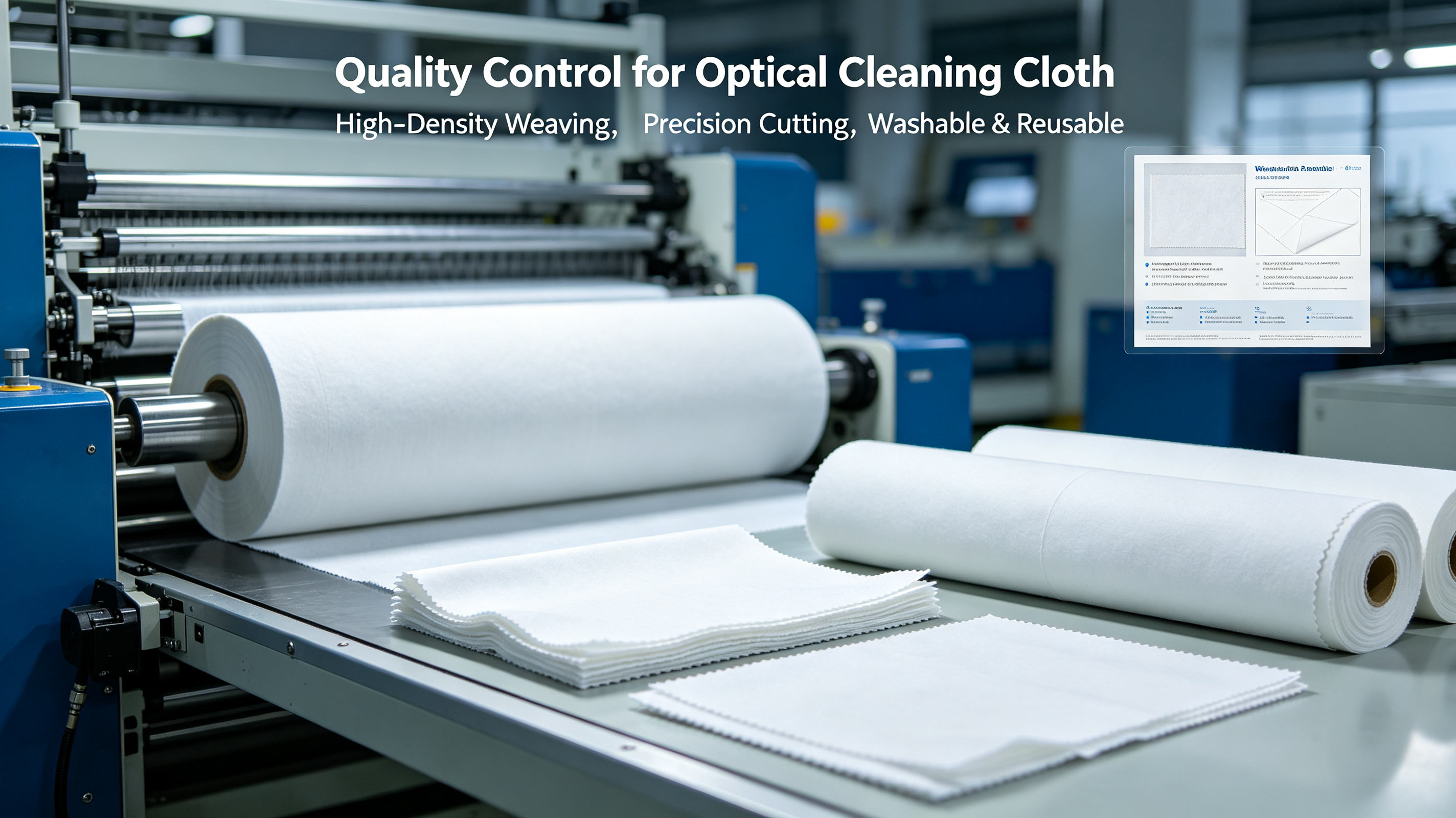
Washable and durable: High-density weaving, no pilling, no lint loss, reusable for long-term use
 Professional Industry Conclusion: Dry cleaning with microfiber cloth is recognized as the safest and most effective lens maintenance method in the global optical industry, avoiding chemical damage and physical scratch damage to the greatest extent.
 EN
EN